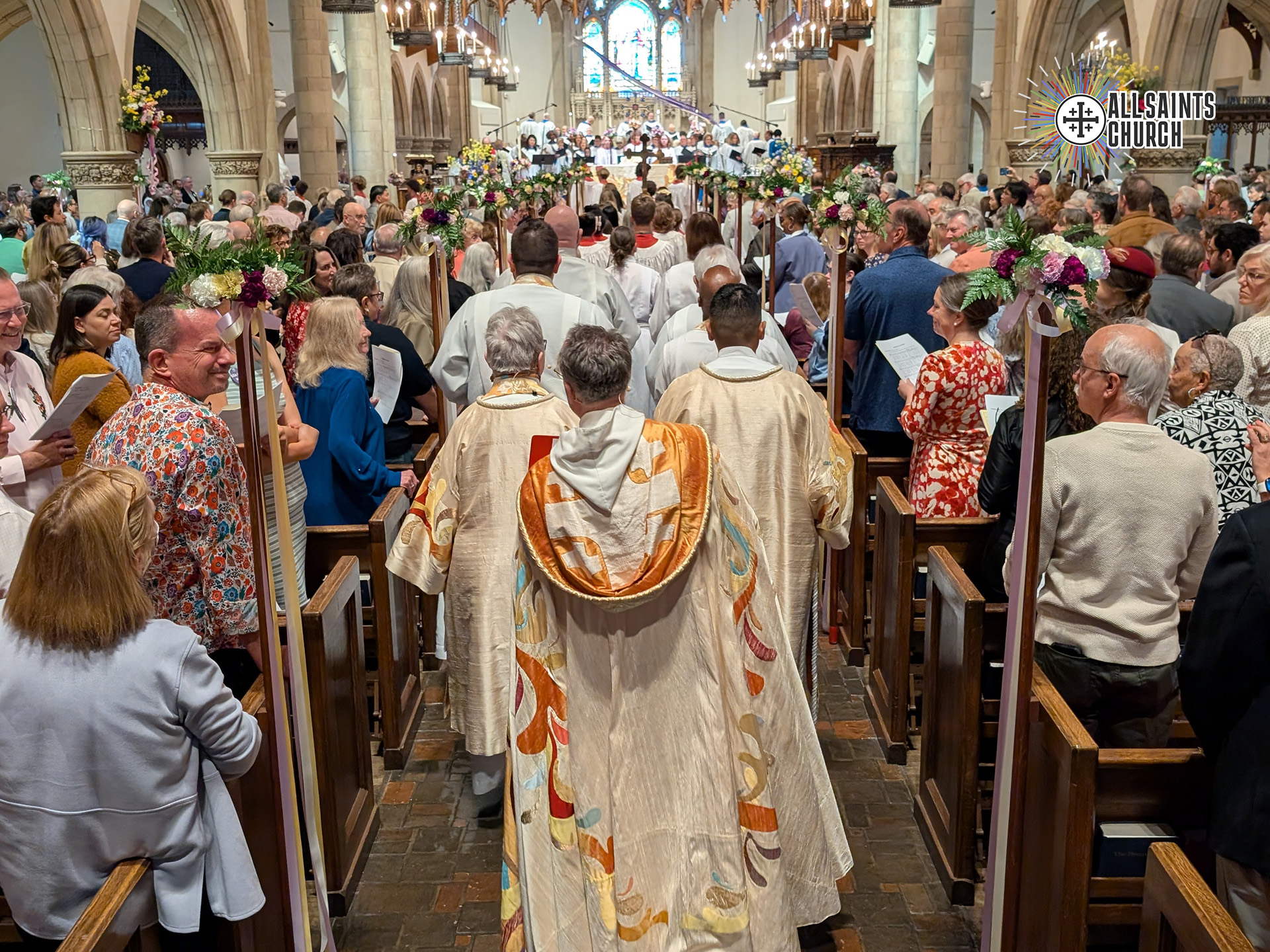
All Saints Church celebrates Black History Month with a variety of opportunities to reflect, learn, and grow together in faith. Throughout the month of February, we honor the sacred worth of Black lives, lift up stories of resilience and hope, and respond to the call to reckon honestly with the sin of racism while embracing God’s vision of love, justice and compassion. As we continue the work of becoming Beloved Community, scripture reminds us that we are one body in Christ — when any part is diminished, we are all diminished. Join us throughout the month as we celebrate the rich contributions of Black leaders, theologians, artists, and communities, and deepen our commitment to walking the way of love together.
Events:
Friday, February 27 — Racial Justice & LGBTQ+ Ministries Concludes its February Freedom Film Fridays:
Origin
6:00 p.m. in the Guild Room. “While grappling with tremendous personal tragedy, Pulitzer Prize winning journalist Isabel Wilkerson sets herself on a path of global investigation and discovery. Despite the colossal scope of her project, she finds beauty and bravery while crafting one of the defining American books of our time.” Rated: PG-13; Runtime 2hr, 21 min. Light snacks will be provided. Questions? Email lgbtq.ascpas@gmail.com.
Resources for Reflection and Inspiration for Black History Month:
Verna Dozier: What Would It Look Like To Actually Follow Jesus
A reflection on the wisdom of Dr. Verna Dozier: A pioneering Episcopal lay theologian, biblical scholar, and educator whose work transformed how many in the Church understand scripture, ministry, and the role of the laity. Dr. Dozier devoted her life to teaching the Bible in ways that empowered everyday Christians to claim their baptismal call to ministry, and was especially known for her book The Dream of God, which challenged the Church to move beyond passive membership toward active participation in God’s work of justice, reconciliation, and beloved community. Her witness combined deep faith, rigorous scholarship, and a prophetic commitment to racial and social justice. See Susan Russell’s reflection on Verna Dozier.
Dr. Howard Thurman: The Kingdoms of This World
Howard Thurman was a theologian, pastor, and mystic whose spiritual teachings helped shape the moral foundation of the Civil Rights Movement. Drawing deeply from the life of Jesus and the lived experience of Black Americans, Thurman emphasized love, nonviolence, and the dignity of every human being as central to Christian faith. His influential book Jesus and the Disinherited explored how the gospel speaks to those facing oppression and fear, offering a vision of inner spiritual freedom that fuels social transformation. Thurman’s witness bridged contemplation and action, showing how faith can be a powerful force for justice and reconciliation – exemplified in this 1962 sermon. Read this from the Howard Thurman Digital Library.
Bishop Barbara Harris: First Woman Bishop in the Anglican Communion
Bishop Barbara C. Harris (1930–2020) was a trailblazing Episcopal leader whose life and ministry reshaped the Church’s understanding of vocation, justice, and inclusion. In 1989 she became the first woman bishop in the Anglican Communion, a moment that embodied her conviction that the Holy Spirit calls whom the Spirit will—often ahead of institutional readiness. Serving as Bishop Suffragan of Massachusetts, Harris brought a fearless, prophetic voice to issues of racial justice, gender equality, LGBTQ+ inclusion, and peace. Grounded in deep faith and unapologetic truth-telling, her witness continues to challenge the Church to trust God’s call, dismantle barriers, and live more fully into the gospel’s promise of liberation for all.
Video: Becoming the first Female Elected Bishop
A Life Beloved: Deaconess Anna Alexander
Anna Alexander is remembered as the first — and only — African-American deaconess in the Episcopal Church. She persisted in her calling of service and education in Jim Crow Georgia, working to eliminate injustice and living out the Beatitudes in ways that were both inspiring and risky, including the creation of Good Shepherd Church and School in the Pennick Community. Recognized as a saint by the Diocese of Georgia since 1999 for her holiness of life, perseverance, and faithfulness to the Gospel, Deaconess Alexander was made a saint by the Episcopal Church in 2015. Read her biography here: Deaconess Alexander. Watch her story here: A Life Beloved – Deaconess Alexander.
Canon Ed Rodman: Strategist, Advocate and Activist
Ed Rodman (1945–2024) was an Episcopal priest, writer, and tireless advocate for racial justice whose ministry challenged the Church to confront white supremacy with honesty and courage. Serving parishes in Massachusetts and beyond, Rodman was known for preaching and teaching that named racism as a spiritual and moral crisis, not just a social problem. He wrote extensively about the Church’s complicity in racial injustice and the hard, faithful work required for repentance and repair. Grounded in the gospel and the Episcopal Church’s baptismal promises, Rodman’s witness continues to call Christians to truth-telling, accountability, and the costly work of reconciliation.
Learn more about his story here.
Pauli Murray: Witness to God’s Indivisible Justice
Pauli Murray (1910–1985) was a pioneering lawyer, civil rights activist, poet, and Episcopal priest whose life and witness reshaped both American law and the Church. An Episcopalian later ordained to the priesthood, Murray helped lay the legal groundwork for Brown v. Board of Education and was a key influence on arguments against sex discrimination, long before the modern women’s rights movement took shape. Murray understood justice as a spiritual calling, insisting that racism, sexism, and homophobia were moral failures as well as legal ones. Through their writing, preaching, and ministry, Pauli Murray bore prophetic witness to the belief that God’s justice is indivisible—and that the Church is called to stand with those most marginalized, in both word and deed.
Watch a video overview of her work and witness | View trailer for feature documentary “My Name Is Pauli Murray”
Byron Rushing: The Fight For Fairness
Byron Rushing was a long time Massachusetts state legislator, President of the Episcopal Church’s House of Deputies and a leading voice on equity, education, and economic opportunity in public policy. As a historian and curator at the Museum of African American History in Boston, Rushing has lifted up the stories of Black resilience and leadership, bearing witness to how faith communities can be powerful agents for social change. A longtime public servant, civil rights leader, and Episcopal lay leader whose life’s work has woven together faith, history, and the struggle for justice, he was also a critical voice in the fight for marriage equality – connecting the struggle for LGBTQ equity with the civil rights struggle.
Watch a short video celebrating his work and witness here.
Claudette Colvin: Undersung Shero of the Civil Rights Movement
Claudette Colvin is a civil rights pioneer whose courageous witness helped spark the modern Civil Rights Movement. At just 15 years old, she refused to give up her seat on a segregated bus in Montgomery, Alabama—nine months before Rosa Parks’ more widely known act of resistance. Colvin later became one of the plaintiffs in Browder v. Gayle, the landmark Supreme Court case that ended bus segregation in Montgomery. Though her bravery went largely unrecognized for many years, Claudette Colvin’s story bears witness to the power of youthful faith, moral conviction, and quiet courage in the long struggle for justice and dignity.
Find out more about her legacy through the Claudette Colvin Foundation
Watch Tim Rich’s February 8 sermon celebrating her courage and witness.
Bishop Chet Talton
Bishop Chester L. “Chet” Talton (1939–2021) was a trailblazing Episcopal bishop and pastor whose ministry centered on racial reconciliation, evangelism, and the full inclusion of Black voices in the life of the Church. As the first African American bishop suffragan in the Diocese of Los Angeles, Talton brought a steady, pastoral, and prophetic presence to congregations across Southern California. He was a gifted preacher and teacher who emphasized spiritual renewal, cross-cultural ministry, and the Church’s call to be a living sign of God’s reconciling love. Bishop Talton’s witness continues to inspire the Episcopal Church to embody justice, unity, and hope rooted in the gospel.
A Reflection: Remembering +Chet Talton
From the All Saints Archives:
Nikki High: The Historical Significance of Black Altadena
In February 2025 – in the wake of the disastrous Eaton Fire – founder and owner of Octavia’s Bookshelf Nikki High explored the historical significance and roots of Black Altadena – offering both hope and challenge for the navigation of the devastating crisis and looking towards rebuilding. She offered a powerful call to the community to stay grounded in the history and culture of what made and makes Altadena all that it is in order to continue to make it what it can become on the other side of tragedy and loss.
++++++++++
Bryan Stevenson: You’ve Got to Be Brave, Brave, Brave
Bryan Stevenson is a lawyer, scholar, and faith-shaped advocate for justice whose work has transformed the fight against mass incarceration and racial injustice in the United States. Grounded in a deep Christian commitment to mercy, truth, and the dignity of every human life, Stevenson calls the nation to confront its history of racial violence as he bears witness to the power of compassion, hope, and redemption in the pursuit of a more just society. He is the founder and executive director of the Equal Justice Initiative. Stevenson also initiated the National Memorial for Peace and Justice in Montgomery, which honors the names of more than 4,000 African Americans lynched in the twelve states of the South from 1877 to 1950. Here is the sermon he preached at All Saints in February 2016.
++++++++++
Zelda Kennedy’s Sermon: Stepping Outside Your Comfort Zone
“Let our outrage propel us into deepening our commitment to be a loving, compassionate, peace and justice community believing in the right of every human being to live a life of peace and joy with dignity.”
Sermon by Zelda Kennedy, preached on Sunday, July 10, 2016, in the wake of the tragic violence in Baton Rouge, Minneapolis and Dallas. The service was preceded by a silent prayer march for members of the congregation and community. Photos of the march are posted here.
++++++++++
Lydia Wilkins: An Interview for “Black Episcopalians of Los Angeles”
Lydia Wilkins – a life-long Episcopalian and long-time member of All Saints Church lived to be 106. She saw more than a century of hard-fought change in race relations and relished casting her vote for the first black president. Described in her Pasadena Star-News obituary as “A devoted – and impeccably stylish – parishioner at All Saints Episcopal Church, Wilkins continued to attend services until two weeks before her death. All Saints Rector Ed Bacon said “She was nothing short of amazing. She was a person full of stories and eager to tell them to the world.” Interviewed in 2005 at the age of 102, here are some of those stories.
++++++++++
Dr. James Lawson: Lifelong Witness to Nonviolent Activism
Dr. James M. Lawson Jr. (1928–2024) was a Methodist minister, theologian, and master teacher of nonviolence whose work profoundly shaped the Civil Rights Movement and faith-based activism for justice. Grounded in the teachings of Jesus and inspired by Gandhian nonviolence, Lawson trained generations of activists—including leaders of the Nashville sit-ins and the Freedom Rides—in disciplined, love-centered resistance to injustice. A close mentor to Martin Luther King Jr., Lawson understood nonviolence not as passivity, but as a spiritually rigorous way of confronting evil and transforming both oppressor and oppressed. His lifelong witness joined deep faith, moral clarity, and courageous action, offering the Church a powerful model of how contemplative spirituality fuels social change.
++++++++++